
How to decipher NZ building contracts (and why it matters for your mortgage)
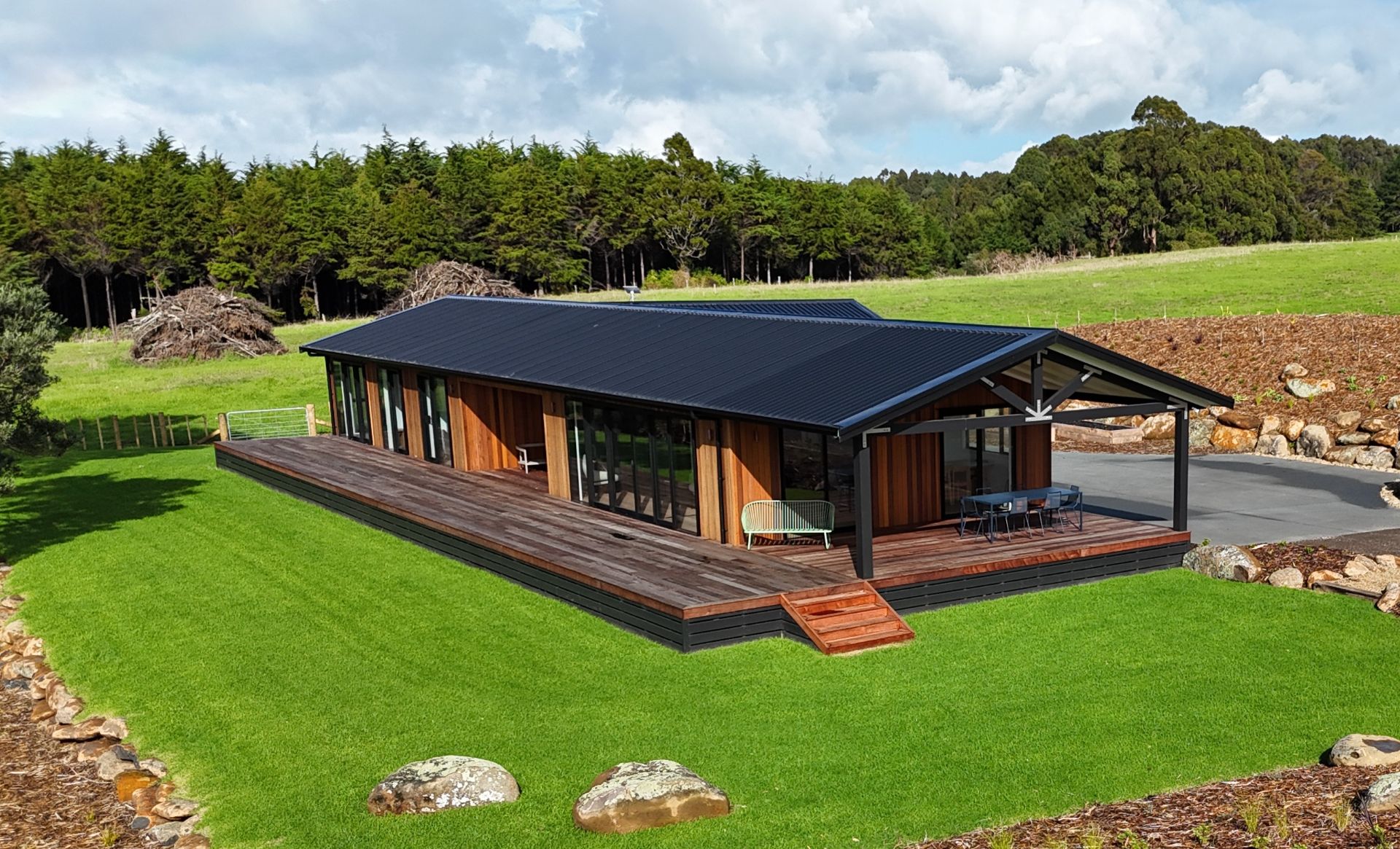
Many New Zealand buyers will come across some version of a ‘fixed price’ building contract when they are building a new home.
The term sounds straightforward enough: you sign a contract for a set amount and expect that figure to stay the same from the start of the project through to handover.
The thing is, though, not many builders offer fully fixed-price contracts. So before you sign any building contract, it’s important to understand exactly what you’re signing: what’s fixed, what’s estimated – and where those variations can still occur.
So…what exactly is a fixed price build contract?
A fixed-price build contract generally means a builder agrees to deliver a defined scope of work for an agreed price. However, there are often parts of a residential build that can’t, or won’t be fully confirmed upfront.
Often, these are the site-specific costs like foundations, site conditions, service connections and council consent fees.
That’s why we’re exploring fixed-price contracts in more detail here: what they really mean, how locking in your costs can strengthen your mortgage position – and how Advance Build’s approach differs from the industry standard.
Why fixed pricing delivers real cost certainty
It’s easy to see why fixed pricing gives you certainty around your project costs: you know exactly what you’re up for, right from the start. The thing is, not many builders in New Zealand actually offer true fixed-price contracts.
But Advance Build can, however, because our prefabricated route means most of the construction happens in a controlled environment – where both costs and timelines are predictable.
In practical terms, this means:
- Costs are calculated and confirmed upfront
- Materials can be ordered in advance and at scale
- Labour is scheduled within a controlled production timeline
- There is no exposure to weather delays or site downtime
- Quality is monitored consistently throughout manufacturing.
In other words, the cost of your project is fixed from the day you sign your contract. In a traditional build, however, where variability throughout the process is common, it’s far harder to guarantee a price.
Advance Build’s approach: real fixed-price contracts
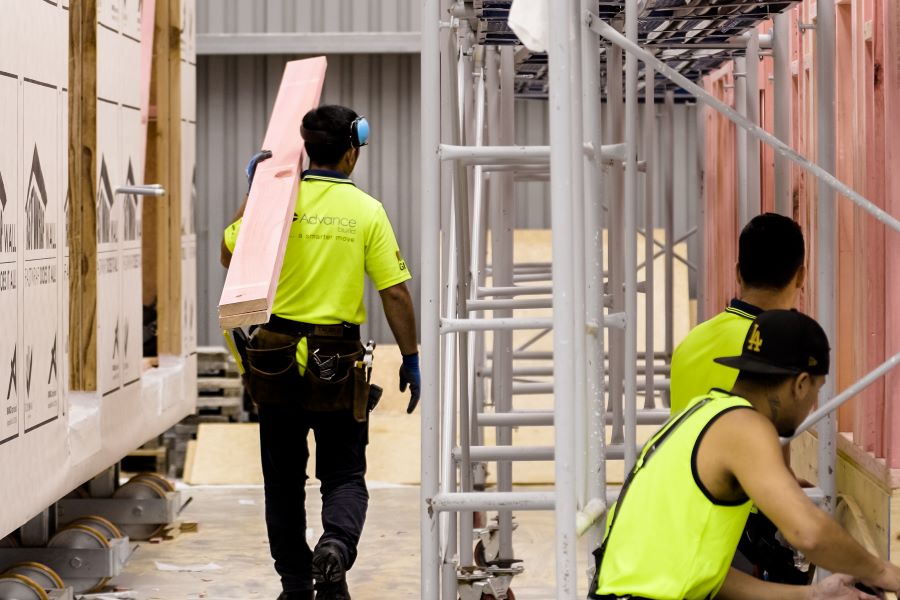
While many fixed-price contracts in New Zealand still include unknowns, Advance Build takes a more comprehensive approach to cost certainty.
Through our end-to-end process, we can identify and confirm site issues, engineering requirements and council-related costs before the final contract is signed. This means buyers have certainty over the full project cost upfront – rather than discovering variations during construction.
Because most of the home is built in a controlled factory environment, Advance Build can accurately calculate and lock in costs before construction begins. Once the required site reports and approvals are complete, buyers receive a genuine fixed-price contract* covering the agreed scope of the project.
In other words, any site-specific variables are addressed before signing – not passed on later as unexpected cost increases during the build.
The table below outlines how each contract type typically works.
| Contract type | What’s locked in | What carries risk |
| Standard fixed price | Defined scope of build | Provisional sums and site-related unknowns |
| Advance Build fixed-price | Fully agreed project cost* | Site conditions must be confirmed before contract signing |
Common mistakes buyers make
When comparing building options in New Zealand, it’s easy for buyers to assume that all fixed-price contracts are the same. In reality, the details hidden inside those contracts can vary significantly from one builder to another.
Common mistakes include:
- Assuming a fixed price means every cost in the entire build is locked in from day one
- Not checking what’s excluded (particularly provisional sums and site allowances)
- Comparing builders based on headline price rather than what is actually included in the scope
- Overlooking site-specific costs such as foundations, services and council requirements
- Assuming a standard construction loan will automatically cover the factory build phase of a prefab home.
Taking time to understand these differences early helps buyers avoid surprises and make more informed decisions about both cost and delivery.
Your checklist: What to look for in a fixed price build contract
When reviewing a fixed-price house contract, it’s important to understand exactly what is included in the contract – and what’s not.
Here’s what to look for.
What should be locked in
- Detailed concept plans –site plan, floorplan, elevations, electrical plan, fittings + fixtures plan and kitchen plan
- Detailed specifications – a comprehensive document detailing exact brand, model, colours and grades of materials being used the total price and a schedule of staged payment milestones
- Date of Practical completion (i.e. move in date).
Remember to consider exclusions
It’s also important to check the exclusions list carefully – not every builder includes the same items in their contract. In some cases, costs that are essential to completing the project (such as engineering or site preparations) may sit outside the quoted price – and only emerge later in the process.
Where possible, Advance Build’s approach is to include everything needed to complete the agreed project scope upfront, rather than leaving necessary components outside the contract. Any exclusions are generally items that are genuinely optional, site-dependent or unlikely to be required – not core elements needed to complete the project or obtain council approvals.
Where the cost blowouts can crop up
Unless you’ve identified and locked in costs early on, it’s easy for them to rise significantly (and quickly).
Ones to watch include:
- Foundations
- Site plumbing and drainage
- Excavation works (driveway, paths, retaining walls)
- Service connections (electricity, data/telecoms, water, stormwater, wastewater, gas)
- Professional reports (engineering, planning, surveying, ecological)
- Council consent fees (resource consent, building consent)
- Transport, delivery and craneage if applicable (Advance Build includes this in the top line price
- Landscaping or external works not included in the core build scope
The key point is certainty and clarity. A well-structured contract should give buyers a clear understanding of the full project cost – including what’s covered within the agreed fixed price and any site-specific items that need confirming before signing.
The goal is to minimise surprises later – and provide confidence around both budget and delivery. For buyers, the goal shouldn’t be a low headline price – it’s far better to have clarity around the full cost structure before construction begins.
Why mortgages can work differently for factory builds

When it comes to construction lending in New Zealand, banks lend based on the borrower’s ability to service the loan, plus the security made available. In most cases, that security is the land and the building being constructed on it.
With a traditional onsite build, a construction loan is typically released in stages as the home is built on the buyer’s land. The bank can take security over the structure as it progresses, which aligns neatly with standard progress payment lending.
Factory-built homes work differently.
Because a significant portion of the home is constructed offsite in a factory, that value is created before the building is physically located on the buyer’s land. As a result, banks generally can’t take security over the home while it is still in the factory environment.
This means standard construction lending doesn’t always align cleanly with the factory build phase of an offsite prefab project – even when the overall cost and contract are clearly defined.
Once the home is transported to site and installed on the buyer’s land, the situation changes. At that point, the bank can take security over the completed structure, and the mortgage can operate in the usual way.
Understanding this difference early helps buyers set up a smoother pathway from contract through to completion.
The prefab lending gap: how Advance Build’s bridging finance solves it

If you’re building a prefab home and are borrowing from a bank to finance it, you’ll still arrange a mortgage in the usual way – it just isn’t drawn down until the home is on your site. The security gap from the bank’s perspective sits in the middle: the factory build and delivery phase.
Advance Build’s finance offerings are designed specifically to bridge this security gap.
Rather than replacing a standard home loan, the bridging facility temporarily funds the factory construction, delivery to site and installation on your land.
Once the building is on site and the bank can take security over the completed structure, your standard mortgage takes over. At that point, the mortgage is used to pay out the bridging facility, and the loan continues as a normal home loan.
Advance Build even offers bridging finance right up to obtaining council code of compliance. Which can occasionally (though not often) be conditions of bank funding agreements (mortgages).
When combined with Advance Build’s fixed pricing, this creates two layers of certainty for buyers:
- A guaranteed price for your factory-built home
- A clear, workable finance pathway through the construction phase.
This combination removes one of the most common stresses of prefab projects: uncertainty around how the factory stage is funded.
How it all fits together
| Advance Build process | Your mortgage | Bridging finance |
| Step 1: Project discovery | Early discussions with lender | Not active |
| Step 2: Getting started | Pre-approval secured | Not active |
| Step 3: The contract – fixed pricing is now in place. | Mortgage approved and in place | Bridging facility arranged (if necessary) |
| Step 4: Factory build | Mortgage in place (not drawn down) | Covers factory construction |
| Step 5: Onsite construction | Bank takes security over home once it’s onsite | Can be repaid or continue until completion |
| Step 6: Handover | Standard mortgage fully active | Settled via mortgage drawdown |
For many buyers, this structure is what makes prefab construction genuinely workable – not just pricing-wise, but from a lending and cashflow perspective, too.
Read more about Advance Build’s financing here.
Real certainty (and a way to actually fund it)
Understanding how build contracts and construction finance work is an important first step when planning a new home. Once you know what’s realistically fixed, what varies by site and how the funding process fits together, it becomes much easier to make confident decisions about your build.
In New Zealand, fully fixed pricing across an entire build is rare. But through Advance Build’s prefab process, buyers can achieve a far higher level of cost certainty before construction begins. Combined with bridging finance, it creates a clearer, more predictable path to building a new home.
Explore your floorplan options here or get in touch with the Advance Build team to discuss your dream home.
*Conditions apply.